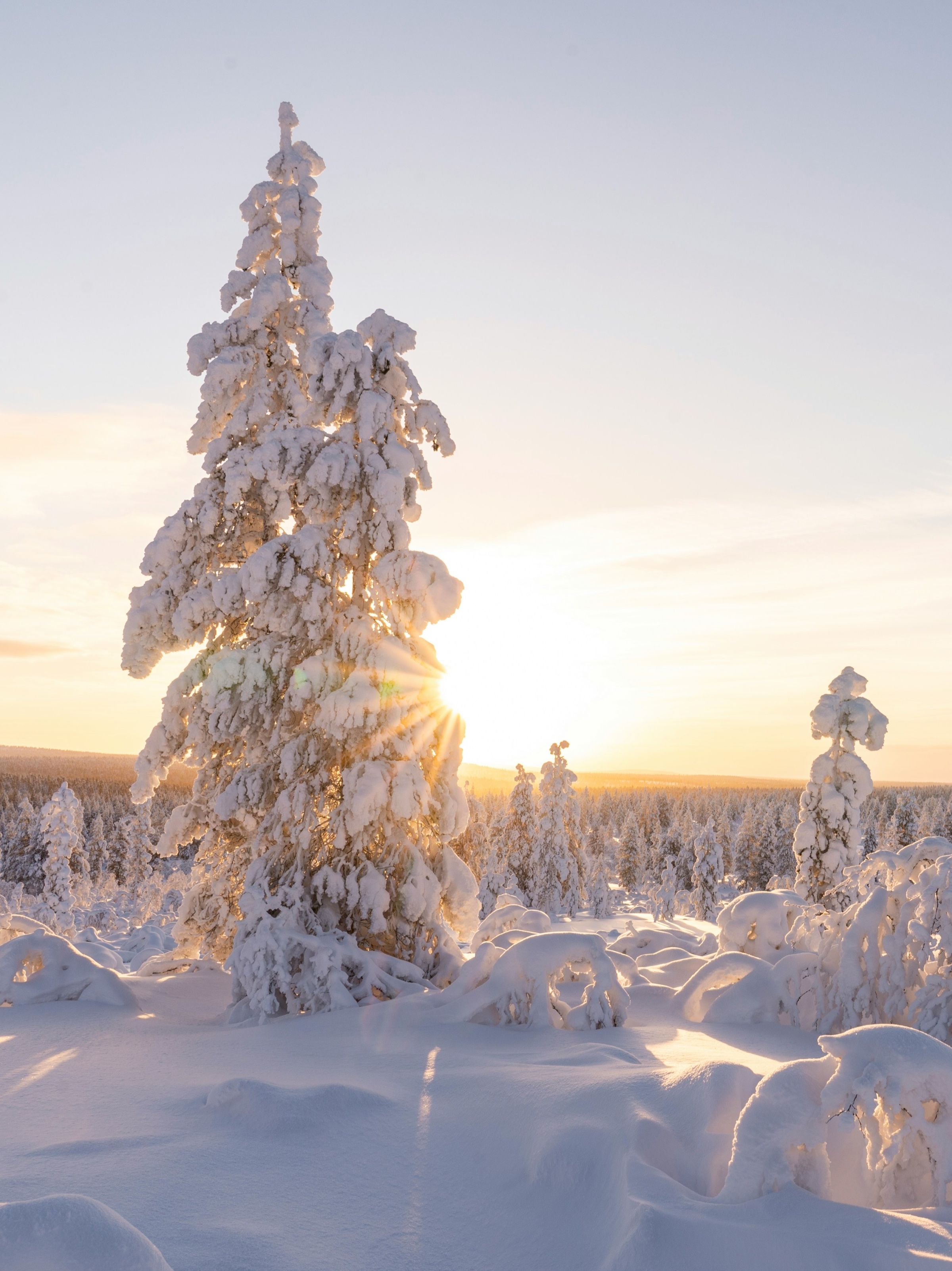
There is no single best month for Lapland. There is a best month for what you want: the aurora, snow and huskies, Christmas, or the midnight sun. Here is how the year works.
The short version
| If you want… | Go in… |
|---|---|
| Aurora + snow activities, longer days | March to early April |
| Christmas atmosphere, Santa, blue polar light | December |
| Deep winter, cold and quiet | January to February |
| Aurora without deep cold (little or no snow) | September to October |
| Midnight sun, hiking, no aurora | June to July |
The aurora season runs from late August to early April. Snow covers the ground for over half the year in Lapland.
Our own pick: if we could go only once, we’d choose February or March.
Autumn: September – October
The first dark nights return and with them the aurora. FMI names September–October and February–March as the most active months, so early autumn counts. The forests turn yellow and red (ruska), and lakes are still open, so the aurora can reflect in the water.
Winter usually begins in Lapland in mid-October, but there is usually little or no snow for activities before that. Husky and snowmobile safaris need snow, so check what each operator runs in autumn.
Early winter: November – December
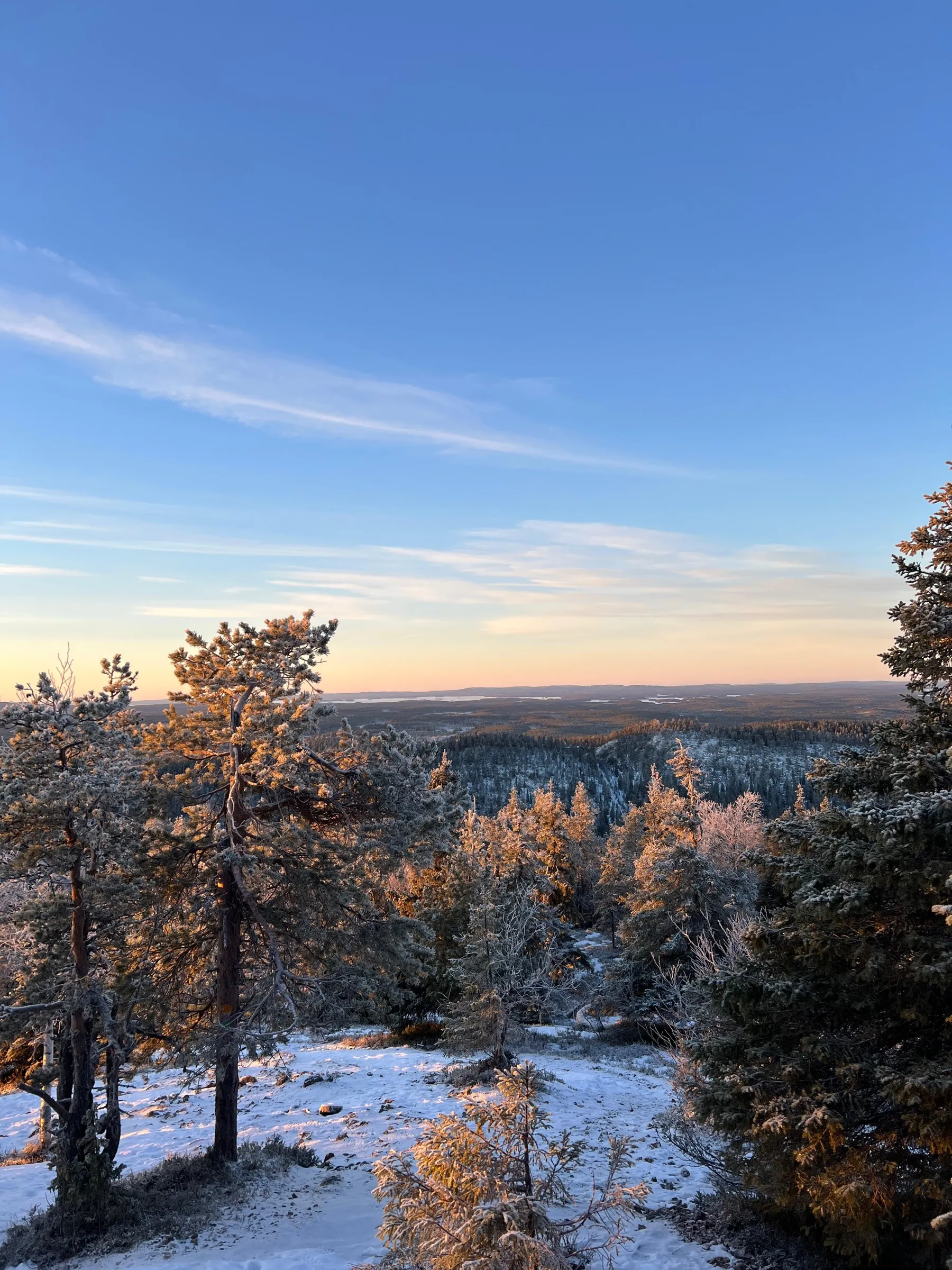
The days shorten fast. In northern Lapland the sun stops rising for weeks: this is kaamos, with its blue midday light.
December is the peak season for Christmas trips to Rovaniemi and Santa Claus Village. Flights, hotels, glass igloos and tours typically sell out first and cost the most. If December is your plan, book early: see when to book.
Deep winter: January – February
Snow, quiet and cold. The coldest day of the winter usually comes at the end of January. Days grow longer again through February, and the main holiday rush is over. A good time for travellers who want winter at its most “Arctic” and are prepared for real cold.
Late winter: March – early April
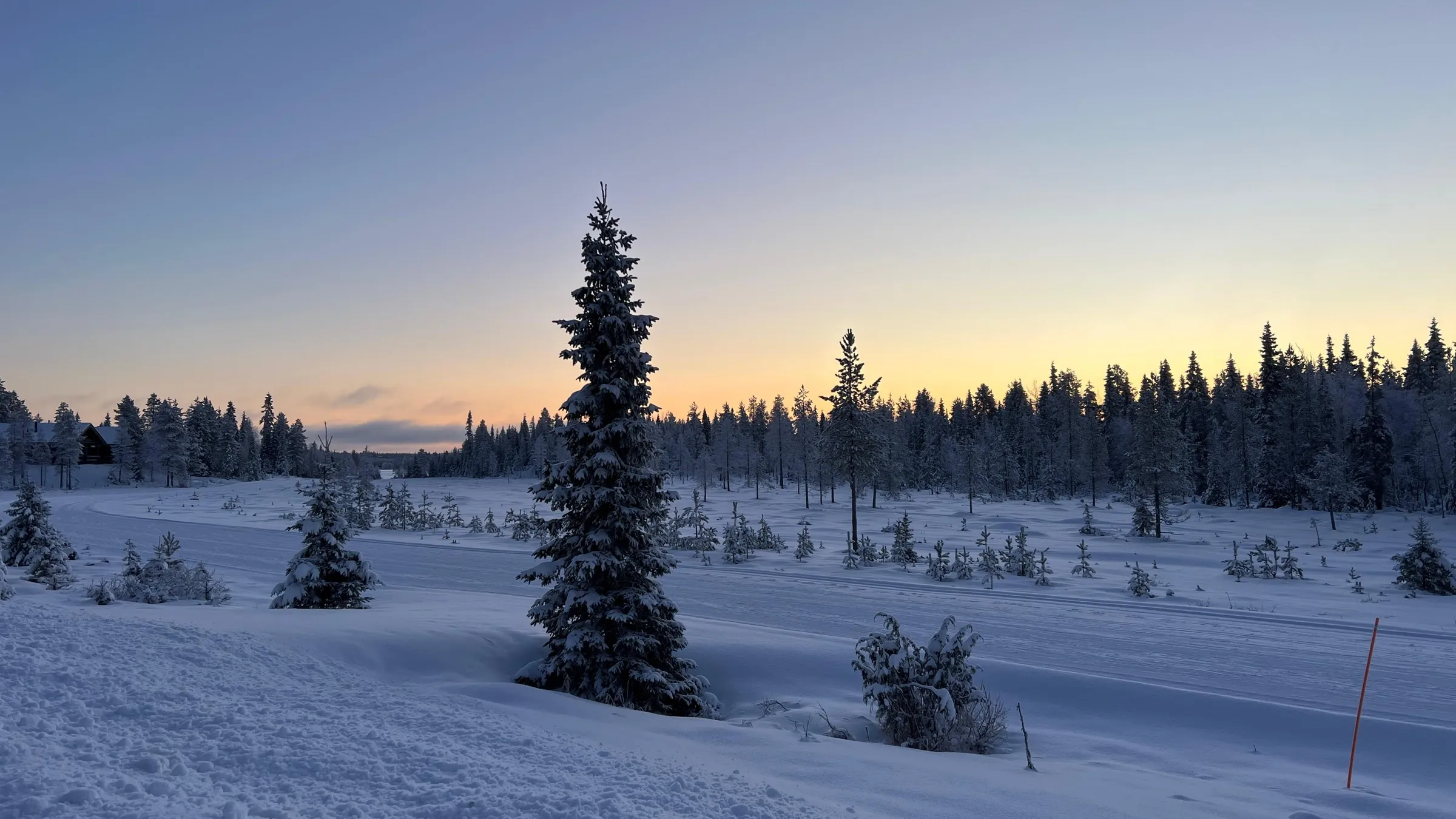
When the weather is also taken into account, FMI says the best time to see auroras in northern Finland is March and early April. Snow cover is thickest in mid-March, in Lapland often as late as early April, so skiing, huskies and snowmobiles are in full swing, and the days are long and bright between aurora nights.
Visit Finland notes that the first weeks of April can still bring sightings in northern Lapland, but by mid-April the chances drop significantly. In northernmost Lapland spring itself only begins in early May.
Our pick for a first trip: March. Aurora odds, snow and daylight are all on your side, and it’s easier on the body than late January.
Summer: June – August
The opposite of kaamos: the midnight sun, hiking, fishing and national parks. There is no aurora (the nights are too light) and no snow activities. A different, quieter Lapland, and a good second trip.
Holidays to know
- Christmas and New Year are the busiest and most expensive weeks of the year in Rovaniemi.
- Your own country’s holidays (for example Lunar New Year) can make flights from Asia busier and pricier; check your dates early.
Next steps
- Pick your month.
- Choose where to stay: Rovaniemi, Levi or Saariselkä.
- Decide how many nights to give the aurora.
Questions
What is the best month to visit Lapland?
For the aurora plus snow activities, March and early April are the safest choice. December is for Christmas; September–October for aurora without deep cold.
When is Lapland coldest?
Usually in late January.
Is there snow in October?
Often little or none. Choose winter months if snow activities matter.
Facts on this page
Every number on this page comes from the source below and was checked on the date shown.
| Fact | Value | Source | Checked |
|---|---|---|---|
| Aurora viewing season in Finnish Lapland | late August to early April | visitfinland.com | |
| Best months for auroras (activity) | September–October and February–March | en.ilmatieteenlaitos.fi | |
| Best time in northern Finland when weather is also considered (FMI) | March and early April | en.ilmatieteenlaitos.fi | |
| When winter (thermal) usually begins in Lapland | mid-October | en.ilmatieteenlaitos.fi | |
| Usual timing of the coldest day of winter (inland) | the end of January | en.ilmatieteenlaitos.fi | |
| When snow cover is usually thickest in Lapland | mid-March, in Lapland often as late as early April | en.ilmatieteenlaitos.fi | |
| How long the ground is typically snow-covered in Lapland | over half the year | en.ilmatieteenlaitos.fi | |
| When spring begins in northernmost Lapland | early May | en.ilmatieteenlaitos.fi |