In Finnish, kaamos (say it KAA-moss) is the time of year when the sun no longer rises. Every Finn knows the word. In the south it means the heavy grey of November. In Lapland it means something stranger and quieter: weeks when the day is only a blue glow between two long nights.
We named this guide after it because kaamos is the Lapland most visitors never imagine. It is not the Christmas-card version, and not the midsummer one. It is the north in its own light.
Where the sun stops rising
The polar night only happens north of the Arctic Circle, the line of latitude at about 66°33′ north. In Finland the circle runs through Rovaniemi. The further north you go from there, the longer the sun stays below the horizon.
- Close to the Arctic Circle, in Sodankylä, the polar night lasts only four days.
- In Utsjoki on Finland’s northern border it lasts almost two months.
- The Finnish Meteorological Institute puts it at 51 days in the very northernmost corner of the country.
Rovaniemi sits right on the circle, so its midwinter days are very short but the long, weeks-deep kaamos belongs further north: Inari, Saariselkä, Utsjoki and the fells around them.
What it actually looks like
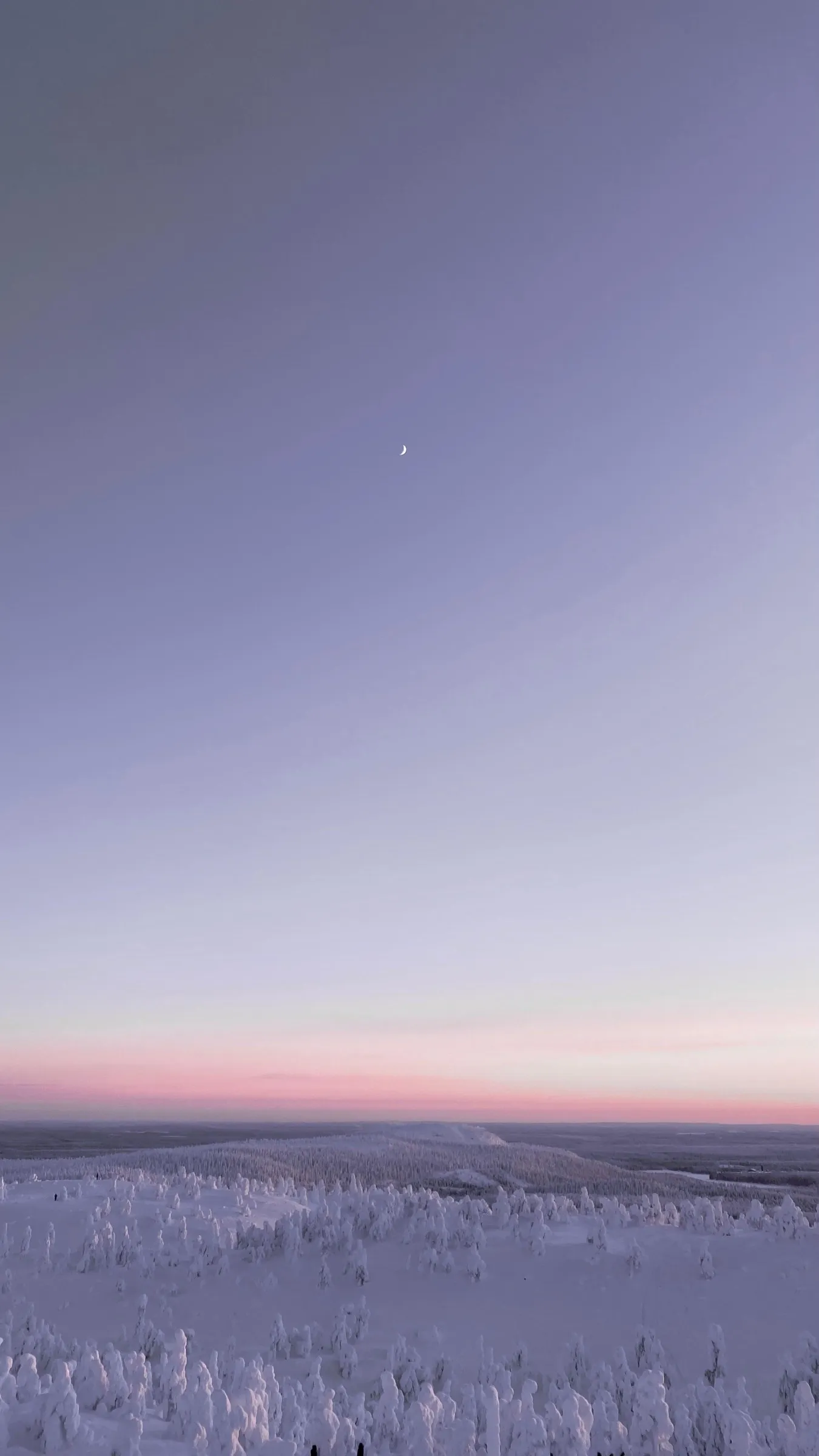
People expect darkness. What they get is colour.
Kaamos is rarely pitch black. The sun is below the horizon, but its light still reaches the upper atmosphere, so for a few hours around midday the sky turns a deep, clear blue. Snow takes that blue and holds it. On clear days the southern horizon glows pink and orange, as if sunrise were about to happen and then changes its mind.
Finns call this blue twilight sininen hetki, the blue moment. It is the light photographers wait all year for, and in kaamos it lasts for hours instead of minutes.
Good to know: the blue light is brightest around the middle of the day. Plan outdoor walks, photos and safaris for late morning to early afternoon, and keep the evening for the aurora.
Why kaamos is good for the aurora
The aurora is there all year round, but you can only see it when the sky is dark. In kaamos, the sky is dark for most of the day. That means more hours in which a display could appear, not just a few hours around midnight.
Two things still decide whether you see it:
- Clouds. The aurora happens far above the weather. If there is cloud between you and it, you will not see it, however strong the forecast is.
- Patience. Displays come and go. Give yourself several nights, not one. Our aurora guides explain the real odds and how to plan for them.
Living with kaamos
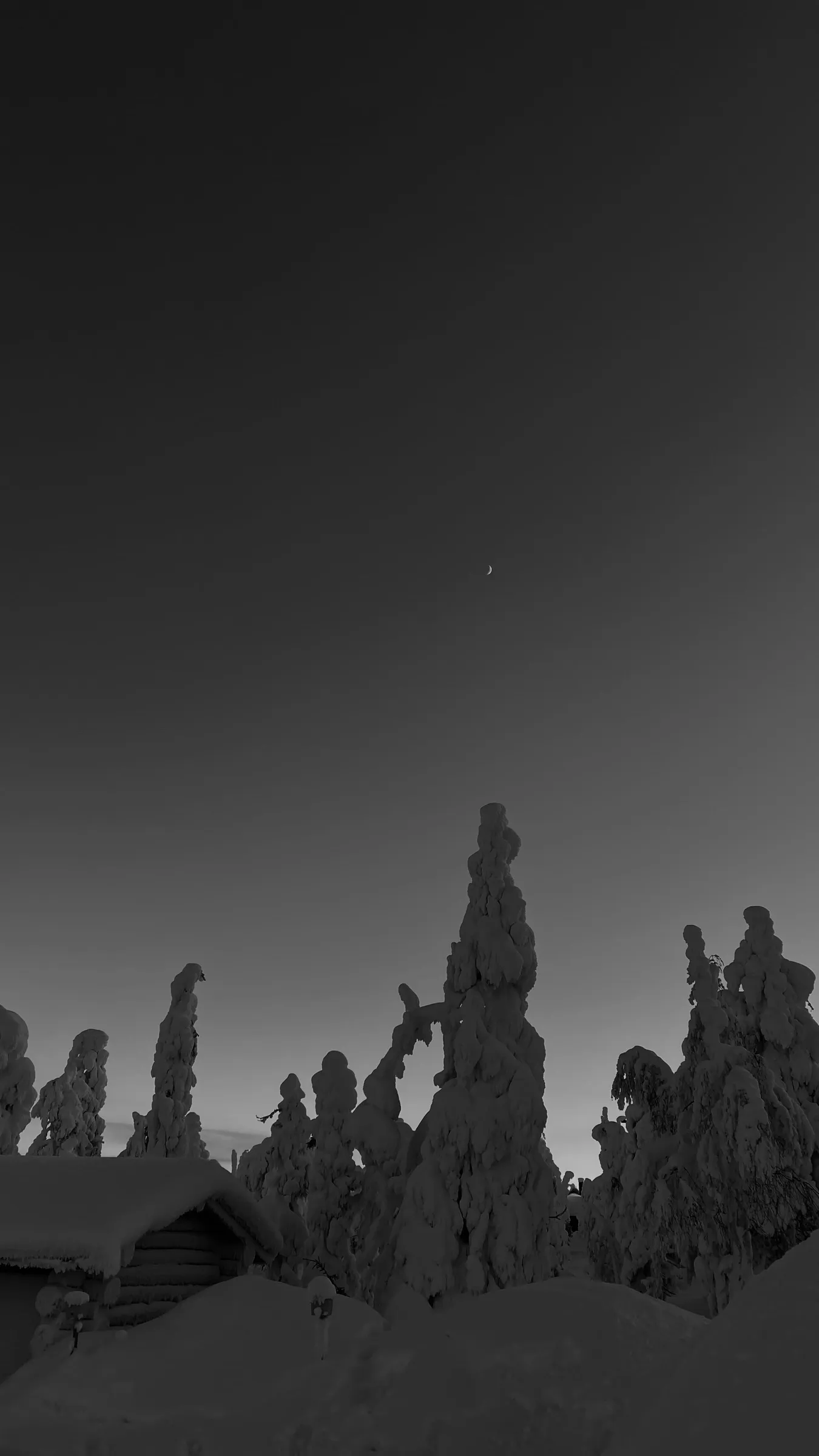
For people who live in northern Lapland, kaamos is simply part of a long winter: winter in Lapland lasts about 200 days. Life does not stop: work, school and the sauna carry on, candles burn in windows, and people still go out to look at the sky.
That is the spirit of the season: warmth inside, a wide cold quiet outside, and a reason to look up.
From kaamos to midnight sun
Everything in Lapland swings between extremes. The same Arctic Circle that brings the polar night brings the opposite in summer: in Rovaniemi the midnight sun lasts about a month, from early June to early July. The light returns slowly after the winter solstice, then all at once.
This guide covers both. But if you want to understand why people fall for the north, come once in kaamos.
Our own memory of the dark season is from Ruka, just south of the polar night: an evening out in the dark, and then the aurora lighting up the whole sky.
Facts on this page
Every number on this page comes from the source below and was checked on the date shown.
| Fact | Value | Source | Checked |
|---|---|---|---|
| Length of the polar night (kaamos) in Utsjoki, Finland's northern border | almost two months | finland.fi | |
| Polar night length in the northernmost corner of Finland (FMI) | 51 days | en.ilmatieteenlaitos.fi | |
| Polar night length in Sodankylä, close to the Arctic Circle | four days | finland.fi | |
| Latitude of the Arctic Circle (approx.) | about 66°33′ north | visitrovaniemi.fi | |
| Midnight sun period in Rovaniemi | about a month, from early June to early July | visitrovaniemi.fi | |
| Length of winter (thermal season) in Lapland | about 200 days | en.ilmatieteenlaitos.fi |