“How many nights should we stay?” is the most common question from first-time visitors. There is no number that guarantees the aurora, but there is a way to plan that gives you a fair chance.
Why one night is not enough
Two separate things must happen on the same night:
- The aurora must be active over you. In the Lapland ski resorts (Levi, Ylläs, Saariselkä), the Finnish Meteorological Institute says this happens on roughly 50% of nights that are dark and cloudless. At Kilpisjärvi in the far north it is about 75% of nights.
- The sky must be clear where you are. That is a weather question, and Lapland winters have cloudy spells that can last several days.
Multiply the two and a single night is roughly a coin toss at best, and often worse. Every extra night is another try.
A simple way to decide
Think in aurora nights: nights when you are in northern Lapland, free in the evening, and able to stay out between 9 p.m. to 1 a.m..
- Fewer than three aurora nights: possible, but treat the aurora as a bonus, not the purpose of the trip.
- Three to four: a reasonable plan for most travellers, especially with a guided chase on one of them.
- Five or more, or two different bases: the best chance, and room for other activities on cloudy nights.
These are our planning guidelines, not statistics. They come from how the odds and the weather work together: more nights, more chances.
Count nights, not days. A night that starts with an evening flight arrival or ends with an early departure is not a full aurora night. A night on the sleeper train from Helsinki is not one either.
Put aurora nights early
If your first nights are clear, great. If they are cloudy, you still have time.
- Book a guided aurora tour for the first or second night. Many operators let you rebook if the night is cancelled for weather; check the terms before you pay.
- Keep the last evening free if you can.
- Don’t fill every evening with dinners and shows that keep you indoors.
Spread the risk of clouds
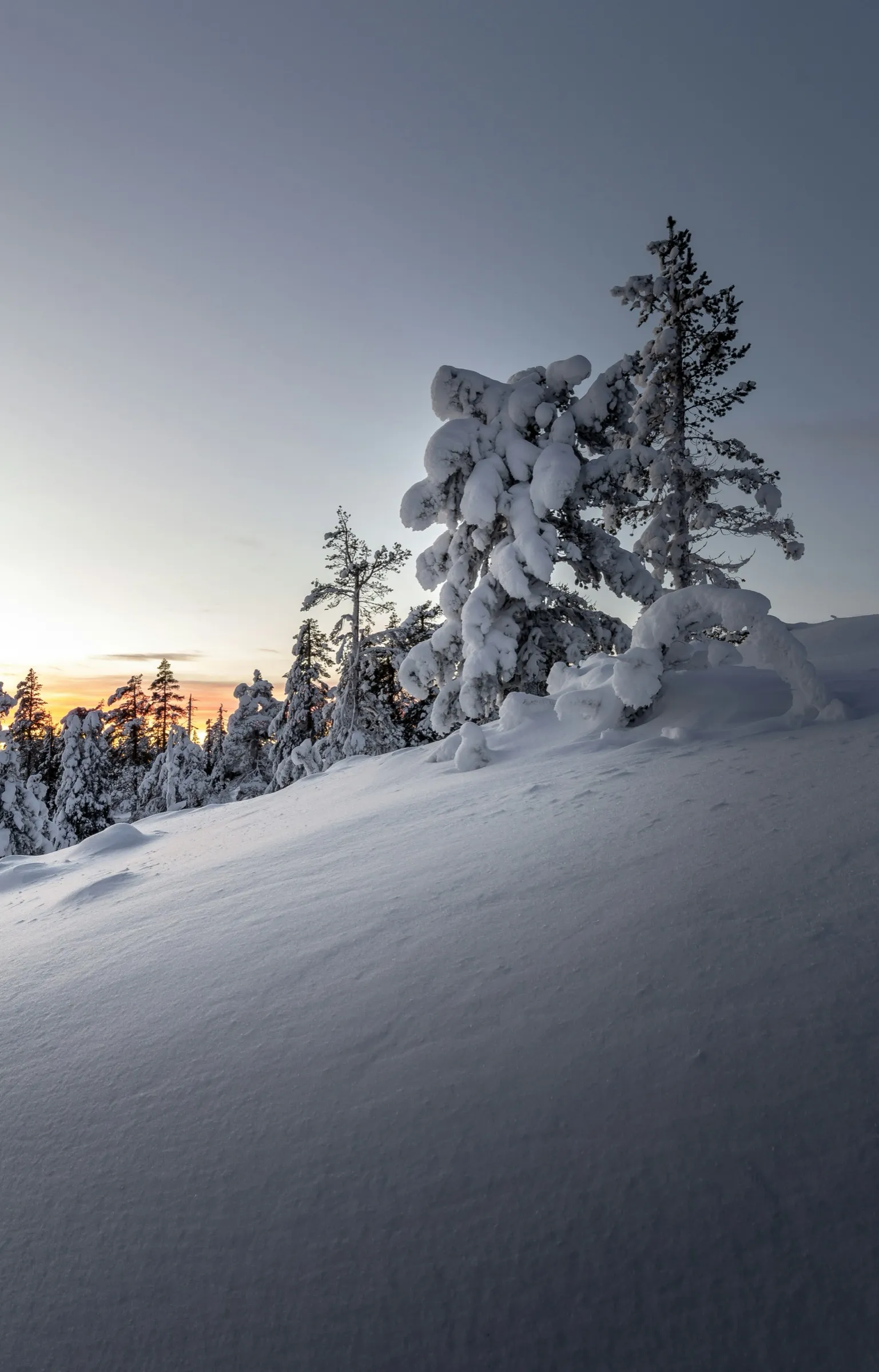
Cloud often covers one area while another, a short drive away, is clear.
- Two bases: for example a few nights in Rovaniemi for Santa Claus Village and the city, then a few nights further north in Saariselkä or Levi for the aurora.
- Aurora chasing tours drive to wherever the forecast shows gaps in the cloud. On your own, check the cloud forecast for nearby towns too.
- Stay somewhere you can see the sky from your room or step outside quickly. Waking up for a display at 1 a.m. is easier than going out for it.
What to do on cloudy nights
Cloudy nights are still Lapland nights: sauna, a husky or reindeer safari earlier in the day, a quiet walk in the blue light, or simply sleep. The plan your trip section has ideas for each season.
Related
- Northern lights in Finland: when, where and your real odds
- Aurora tours vs going on your own
- Best time to visit Lapland, month by month
Questions
Is one night enough to see the northern lights?
Rarely. Clouds are the main risk, and one cloudy night ends your chance. Plan several nights in northern Lapland.
Should I do the aurora at the start or end of my trip?
Put your aurora nights early, so a cloudy start still leaves spare nights later in the trip.
Does splitting the stay between two places help?
Yes. Two bases, or a guided chase, let you escape a cloudy area.
Facts on this page
Every number on this page comes from the source below and was checked on the date shown.
| Fact | Value | Source | Checked |
|---|---|---|---|
| Probability on a dark, cloudless night in Lapland ski resorts (Ylläs, Levi, Saariselkä) | roughly 50% of nights | en.ilmatieteenlaitos.fi | |
| Probability of auroras on a dark, cloudless night at Kilpisjärvi | about 75% of nights | en.ilmatieteenlaitos.fi | |
| Best time of night to see auroras (local time) | 9 p.m. to 1 a.m. | en.ilmatieteenlaitos.fi |